
 +86-0755-86131192
 2026-07-22
Flatfoot is one of the most common foot deformities.
There are several ways to assess flatfoot, as outlined below:
1.Wet footprint test
This is a easy way that wet your sole of foot and step onto a sheet of paper or the floor to leave your footprint, then obverse its shape.
Normal foot: there is a clear narrow gap in the middle of the footprint.
Flatfoot: the middle of the footprint is almost fully connected. The entire sole makes full contact with the surface, and the foot arch disappears visibly.
This way is easy to operate, and it can test in every time and everywhere. However, it only offers rough assessment. It lacks precision and hard to distinguish different severity levels of flatfoot.
2.Visual inspection
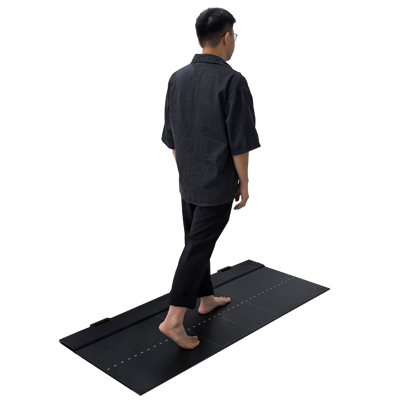
Stand naturally with both feet, and observe the heels from behind.
Check whether there is an abnormal bulge on the inner side of the ankle, which may indicate flatfoot.
Most cases of flatfoot are accompanied by heel valgus.
This method relies heavily on personal experience. Its findings are not entirely reliable, and misjudgments may easily occur.
3.Measurement with a 3D foot scanner
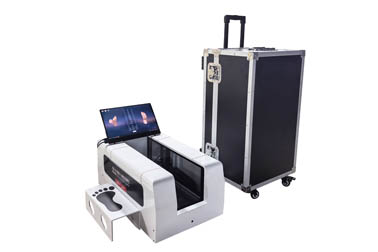
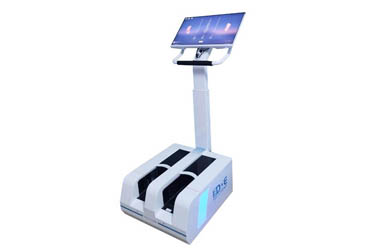
The 3D foot scanner works based on laser optical technology to capture foot measurements.
It collects three-dimensional data of the foot, including foot length, foot width, arch height, plantar contact area and heel angle.
Users simply stand on the scanning platform, and the whole process takes roughly 20 seconds. The device generates 3D models and a formal measurement report. The report provides a foot condition evaluation, identifying issues such as flatfoot, high arch, heel varus and heel valgus.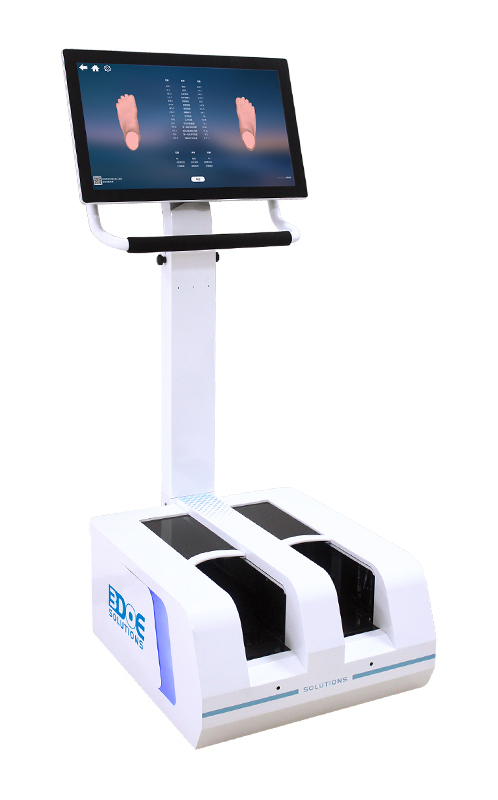
Two main ways are used by 3D foot scanners to evaluate flatfoot:
First, the Arch Height Index (AHI). AHI = maximum arch height /total foot length. Normal range: 0.175~0.21; mild flatfoot: 0.155~0.175; moderate to severe flatfoot: less than 0.155.
Second, the Arch Index (AI). AI = midfoot contact area /total plantar contact area. Flatfoot is determined when the AI value > 0.26.
3D foot scanning delivers precise data for objective analysis, so evaluation results tend to be accurate. The test is time-efficient and offers a comprehensive overview of foot health.
In addition, scanned 3D data in formats such as STL can be used to manufacture orthotic insoles and corrective footwear. It supports treatment and correction for foot deformities including flatfoot and high foot arch.
 Back to list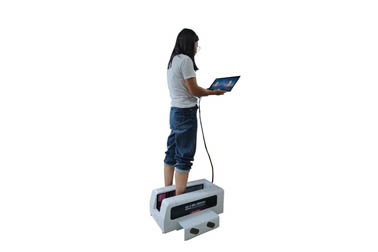


 +86-0755-86131192