
 +86-0755-86131192
 2026-09-20
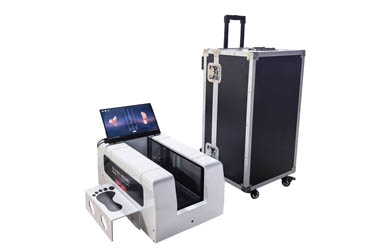
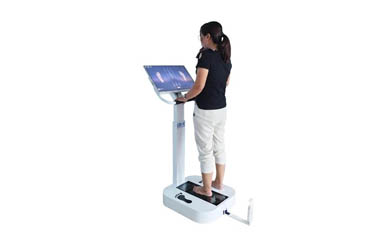
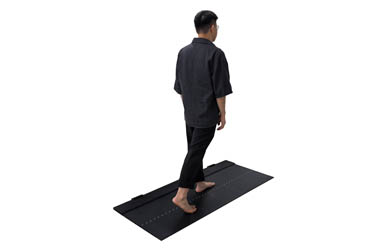
The gait analysis pressure testing equipment embeds thousands of high-sensitivity sensors inside the pressure plate to collect real-time pressure distribution data of various plantar parts when a person stands still or walks across the pressure plate.
The main data measured by this equipment include parameters such as the peak pressure of each plantar zone, pressure proportion, single-leg stance duration, time nodes of each ground contact phase (heel strike, foot flat, push-off peak), foot progression angle, cadence and step length, the motion trajectory of the center of pressure (COP), as well as the contact time and pressure impulse of each foot zone.
The gait analysis pressure testing equipment has three major measurement modes, namely static measurement, balance measurement and dynamic measurement.
In the static measurement, users only need to stand still on the sensing area of the pressure plate, keep the body relaxed and natural and look straight ahead during the measurement, and the entire static measurement process lasts only about 3 to 10 seconds.
In the balance measurement, users only need to stand still as in the static measurement, with the only difference being the selected measurement mode.
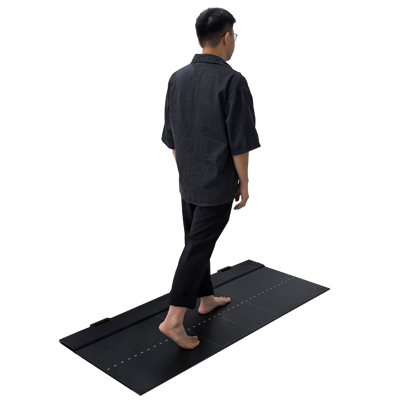
In the dynamic measurement, users need to walk back and forth across the pressure plate for 3 to 5 times, keep the body relaxed and natural during walking, and the entire measurement process is also very short, approximately 5 to 15 seconds.
After the completion of the test in each measurement mode, original pressure data files and visualized measurement reports will be generated, through which we can fully understand the conditions of our feet in an all-round way.
The gait analysis pressure testing equipment is widely applied in the fields of sports medicine and competitive sports; orthopedics and foot and ankle surgery; rehabilitation medicine, neurology and pain medicine; child health care and pediatrics (adolescent foot development screening); endocrinology (diabetic foot prevention); geriatrics, elderly care institutions and physical examination centers; prosthetics and orthotics engineering; and scientific research and industrial applications.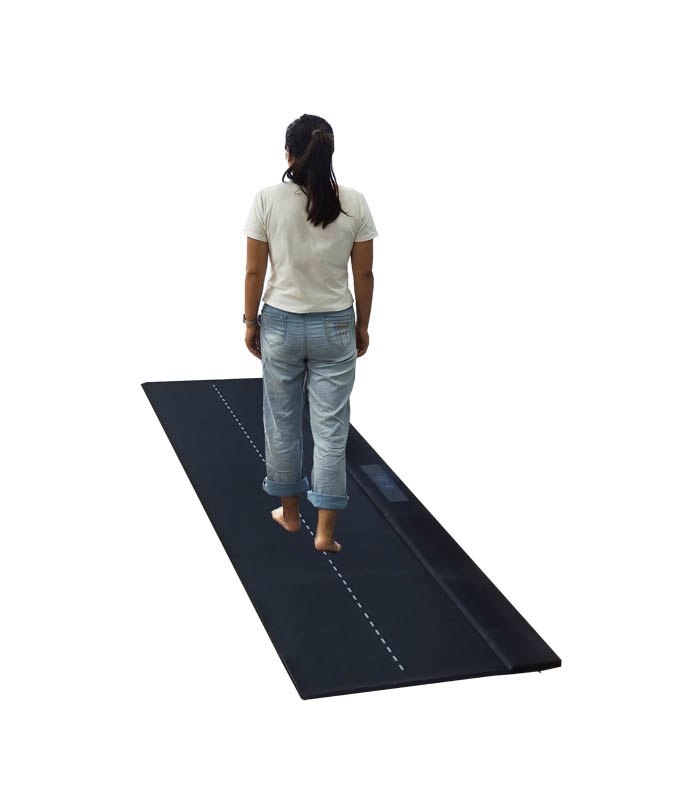
This article mainly introduces how sports medicine corrects abnormal gaits with the help of gait analysis pressure testing equipment:
1. Conduct analytical diagnosis based on data to distinguish whether the problem is a compensatory problem or a primary problem.
For example, foot valgus caused by posterior tibial tendon insufficiency is defined as a primary problem.
Foot valgus that occurs when patients deliberately change their foot landing posture to relieve pain after an ankle injury belongs to secondary gait abnormality, namely a compensatory problem.
Professional doctors analyze and diagnose through measured data whether the abnormal gait is caused by active force exertion or passive structural collapse.
2. Formulate targeted intervention schemes.
Professional doctors will formulate intervention schemes based on relevant data after completing diagnosis.
Custom insoles can be adopted for gait correction.
For high arches, the buffer and shock absorption effect can be achieved by reducing high-pressure points in the metatarsal region.
For flat feet, a pressure dispersion design will be applied to the medial foot area to guide the plantar center of pressure back to the normal trajectory.
For metatarsalgia problems, pressure relief hollowing can be performed in the high-pressure metatarsal region.
After the custom insoles are made, it is recommended to retest the plantar pressure distribution after wearing the insoles to verify the improvement effect.
3. Develop rehabilitation training schemes based on test data.
In addition to wearing corrective insoles, targeted rehabilitation training should be combined to improve foot health conditions.
Exercises such as calf raises and intrinsic plantar muscle training can improve insufficient foot push-off, with the core goal of rebuilding the normal foot landing sequence and restoring normal center of gravity transfer.
For specific sports such as running, the cadence and foot landing position can be adjusted based on test data to reduce heel impact force and lower the risk of sports injuries.
For structural deformities that cannot be effectively improved by corrective insoles and rehabilitation training, surgical treatment may be required, and the pressure test data can be used for objective preoperative evaluation and postoperative evaluation.
 Back to list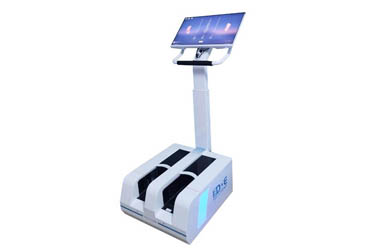


 +86-0755-86131192