
 +86-0755-86131192
 2026-04-23
Orthopedic Insoles and Their Design & Production Process
Orthopedic insoles are one of the common auxiliary means for correcting some foot deformities, such as flat feet, high arches, pes varus, pes valgus, hallux varus, hallux valgus, etc.
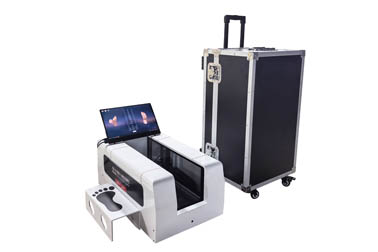
In the design and production of orthopedic insoles, the plantar 3D laser scanner is the most commonly used advanced measuring tool.
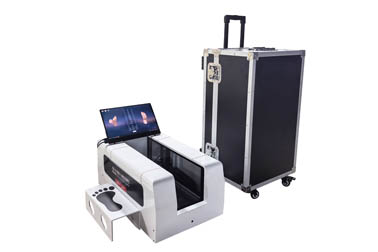
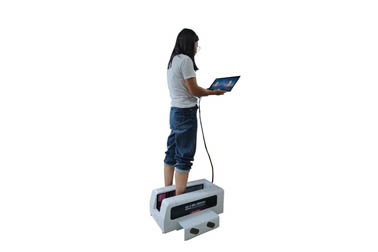
The plantar 3D laser scanner collects key plantar data such as the size and shape of the human foot through the optical principle of laser, and can generate a graphical measurement report as well as 3D data reports such as STL.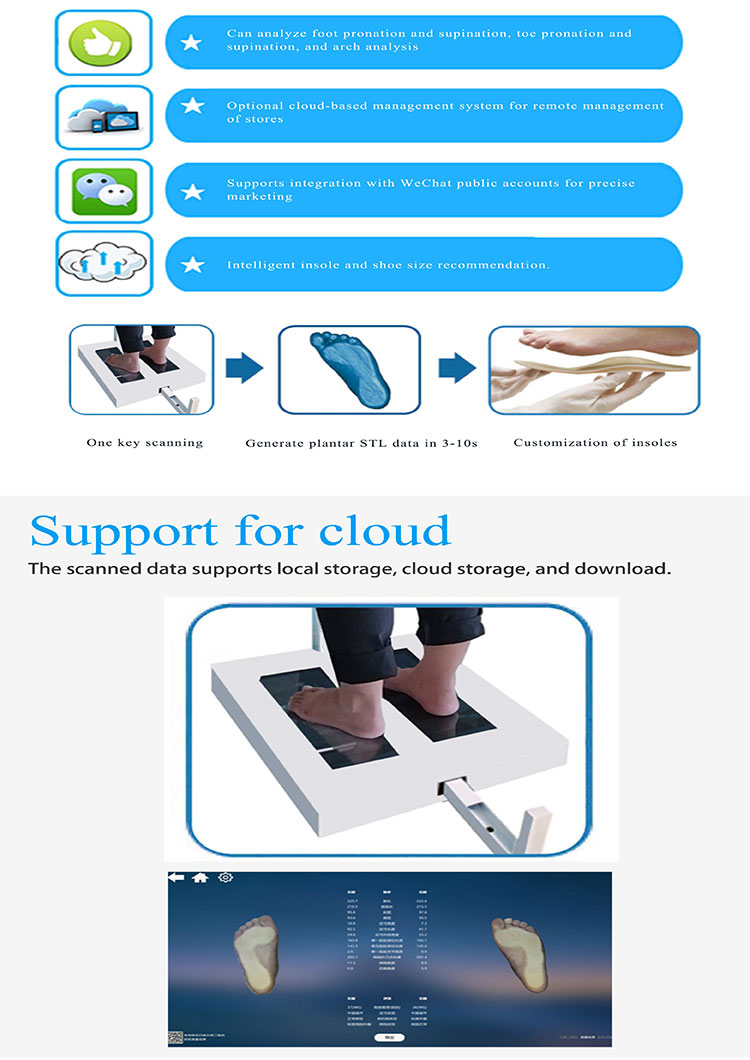
The process of designing and producing orthopedic insoles using a plantar 3D laser scanner is as follows:
1. Obtain plantar 3D data through a plantar 3D laser scanner.
This step is very important for insole design.
Especially when designing insoles through modern 3D software, 3D format data is very important.
Making insoles requires a modeling process, and 3D data such as STL can be directly used for modeling.
After the plantar 3D scanner measures the data, the STL data can be directly imported into the design software for design.
If manual measurement is used, it will take a lot of time, and manual modeling is also required, which is complex, troublesome and inefficient.
With the emergence of the plantar 3D laser scanner, collecting 3D data has become very simple.
For example, with 3DOE's plantar 3D laser scanner, users only need to stand in the scanning area for about 20 seconds to complete the measurement and obtain complete data. The measurement report and STL 3D data are generated simultaneously, and the accuracy is very high, up to within 0.5mm.
2. Import the data into 3D data software such as CAD for insole design.
After collecting the 3D data and measurement report through the plantar 3D laser scanner, the designer also needs to analyze these data and make a reasonable correction plan.
After completing the plan, import the STL format data into 3D insole design software such as CAD to model the insole, and select appropriate support force according to the plan, so that the designed insole truly has the corresponding correction effect.
This step is also very important and one of the cores of making orthopedic insoles.
This also depends on the designer's professional level and rich experience in foot correction. The more excellent the designer is, the better the correction effect of the designed orthopedic insoles will be.
If there are relatively severe flat feet, high arches, etc., it is recommended to customize orthopedic insoles in hospitals or more professional rehabilitation institutions, because these professional institutions are more professional in foot-related aspects.
3. Produce insoles through 3D printers or insole engraving machines.
After the designer completes the design on the software, the data also needs to be exported.
Then process it through specific software, and import the data into a 3D printer or insole engraving machine through a USB flash drive or other means for production.
In this process, it usually takes only about half an hour to complete the production of a pair of insoles.
After the insoles are produced, they also need to be polished and pasted to make them more comfortable to wear, more attractive in appearance, and able to meet the personalized needs of consumers.
 Back to list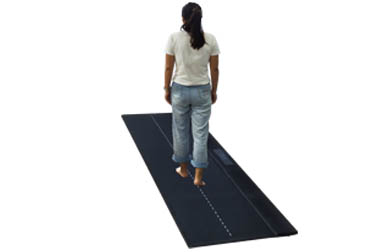


 +86-0755-86131192