
 +86-0755-86131192
 2026-08-24
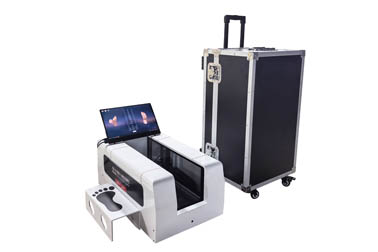
The 3D foot laser scanner projects high-speed laser beams through a laser scanning probe, real-timely captures the complete outer contour morphology of both feet of the human body in a static standing state, and collects 3D geometric dimensions, angular morphological parameters and foot shape topography data of each part of the foot.
The 3D foot laser scanner has only one measurement mode, namely static measurement.
Its main output data include: 3D foot model, full-foot dimension parameters, foot shape angle parameters, foot shape schematic diagrams and other data, which provide an objective basis for the diagnosis of flat foot, hallux valgus, heel varus and valgus, foot asymmetry, as well as the customization of orthotic insoles and shoe size matching.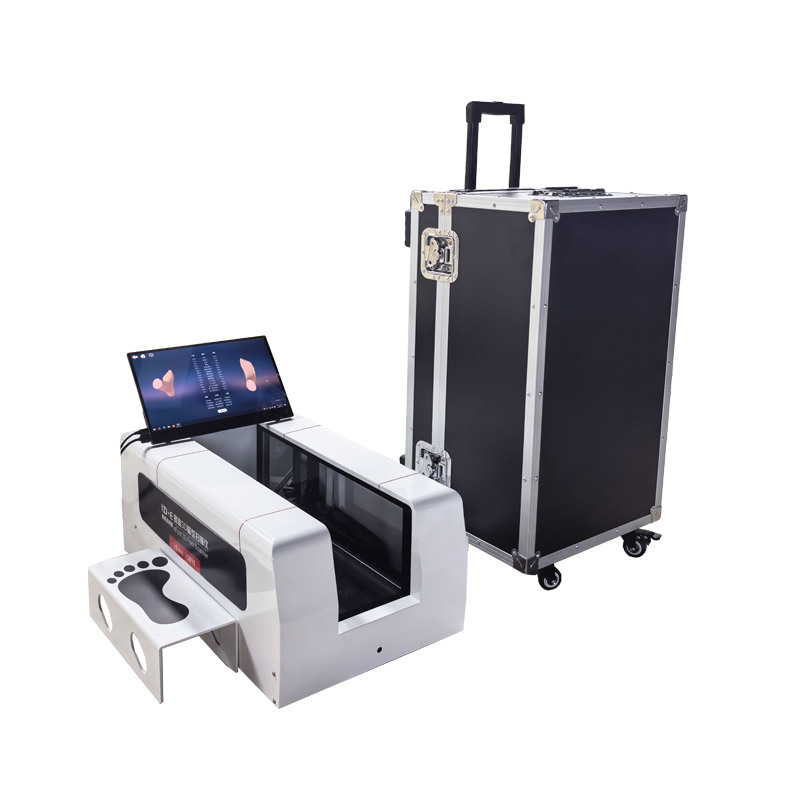
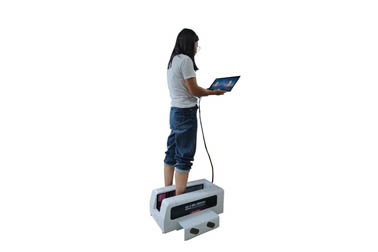
During the measurement process, the tester only needs to stand still in the positioning area of the scanning platform, keep the body relaxed and natural, look straight ahead, place both feet aligned with the positioning marks, and avoid foot movement and ankle rotation. The entire measurement process only takes 5-20 seconds.
The main data collected by static measurement includes: the complete 3D appearance of the left and right feet, foot length and width, segmented lengths and widths, heights of each measuring point, circumferences of multiple foot parts; identification of toe types to distinguish Egyptian foot, Roman foot and Greek foot; foot print coefficient, arch height and arch width coefficient to classify high arch foot, normal arch foot, mild, moderate and severe flat foot; hallux valgus angle, heel inclination angle, spatial coordinates of each foot marker point; contour dimension parameters of multiple parts including the plantar surface, medial and lateral sides of the foot.
Static data can be applied to the evaluation of toe morphological characteristics; general survey and screening of foot types, assessment of bilateral foot asymmetry differences, and original foot shape collection for customized orthotic insoles; judgment of heel varus and heel valgus; evaluation of hallux valgus severity; classification of foot arch types including high arch foot, normal arch foot, mild, moderate and severe flat foot; and shoe size adaptation recommendation.
 Back to list


 +86-0755-86131192