
 +86-0755-86131192
 2026-04-27
Nowadays, with the aging of society, falls among the elderly have become a widely concerned health issue.
The plantar pressure and gait analyzer can currently play an extremely crucial role in this field and serve as one of the important assessment tools.
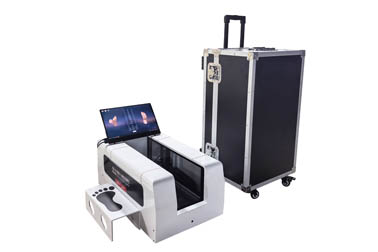
The plantar pressure and gait analyzer is also referred to as the plantar pressure distribution system.
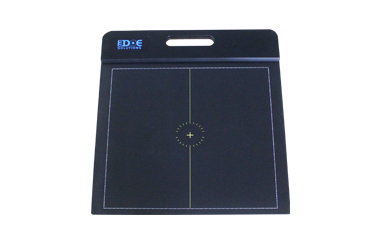
It mainly uses high-density sensors to record plantar pressure distribution data of the human body during walking or static standing. Then it conducts systematic analysis through software and generates data including pressure distribution diagrams, center of gravity trajectory charts and gait cycles.
How is the plantar pressure and gait analyzer applied to the fall risk assessment of the elderly?
1. Static balance test.
During the test, the elderly are required to stand still on the sensing area of the pressure plate for testing.
In this process, the equipment collects and records the range and frequency of the elderly’s center of gravity swing.
If the fluctuation of the center of gravity trajectory is very frequent or the deviation is relatively large, it indicates that the elderly have weak balance control ability and face fall risks.
In addition, eyes-closed standing can be conducted during the test. The eyes-closed test can further evaluate the elderly’s dependence on vision, so as to judge whether the vestibular system and proprioceptive function of the elderly have severely declined.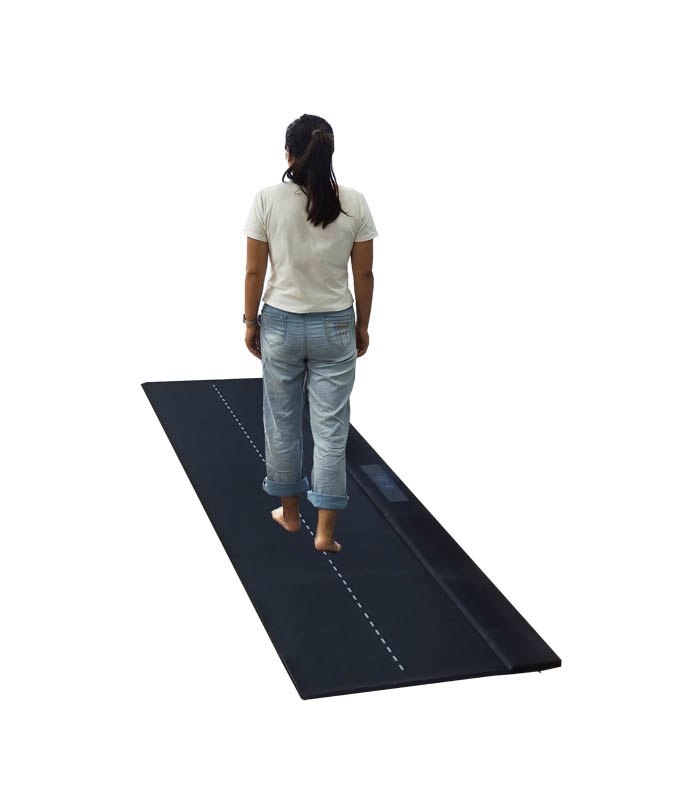
2. Dynamic test.
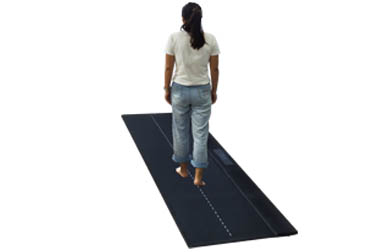
During the test, the elderly only need to walk back and forth across the pressure plate naturally for 3 to 5 times. They shall walk naturally without deliberate movements.
The system records and analyzes key indicators of the elderly during walking, such as step length, step width and bilateral foot force symmetry.
For instance, unstable step length and obvious uneven force on the left and right feet mean problems such as decreased muscle strength or significantly weakened nerve control ability of the elderly, all of which may act as warning signals of high fall susceptibility.
3. Comprehensive assessment through static and dynamic measurement.
With the evaluation of multiple sets of data and data from various test modes, a risk model is established to grade the elderly’s fall risk levels, including low risk, medium risk and high risk.
Rehabilitation therapists will issue personalized reports. The reports not only point out existing potential problems, but also provide feasible intervention suggestions, such as lower limb muscle strength strengthening training, balance training and gait habit adjustment training.
4. Data tracking.
Data from plantar pressure plate tests can be stored and filed for follow-up observation.
Regular evaluation helps analyze data changes of the elderly before and after rehabilitation training, verify whether intervention training and treatment have achieved expected effects, and optimize subsequent intervention plans to attain better results.
 Back to list


 +86-0755-86131192