
 +86-0755-86131192
 2026-04-02
Corrective insoles are mainly used to correct some deformities existing in the plantar area, such as flatfoot correction, high arch correction, inversion and eversion correction, etc.
In the past, measuring the plantar size for making corrective insoles was a very complex step, because a large amount of data had to be collected in order to build a proper model. Manual measurement was prone to relatively large errors, and the data could not be that comprehensive. For example, some curves were very difficult to measure manually.
But now, with the plantar 3D scanner, the measurement process has become very simple.
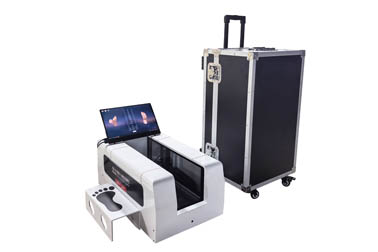
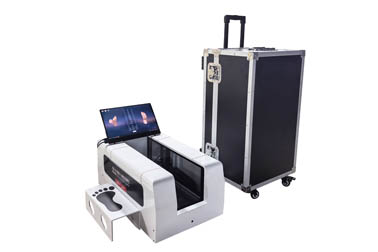
For example, through the 3DOE plantar 3D laser scanner, the user only needs about 20 seconds to complete the acquisition of foot data. It can collect more than 20 sets of data and generate 3D data in formats such as STL and OBJ.
In addition, to achieve better results in making corrective insoles, it is also necessary to have rich plantar pressure distribution data. In this way, the support strength of each part of the plantar area can be arranged more accurately, making the support of each part more scientific and reasonable, and enabling targeted correction at precise pathological locations.
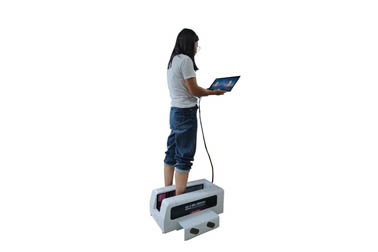
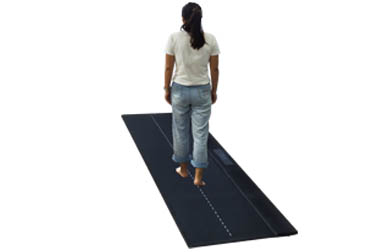
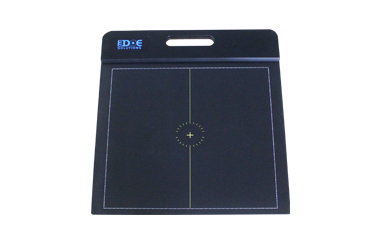
The 3DOE plantar pressure gait analysis system can quickly measure the plantar pressure distribution and gait data of the user, and the measurement time is very short, usually only tens of seconds are needed to complete the measurement.
Whether it is the 3D data measured by the plantar 3D scanner or the data measured by the plantar pressure system, both can be imported into professional insole design software for corresponding design.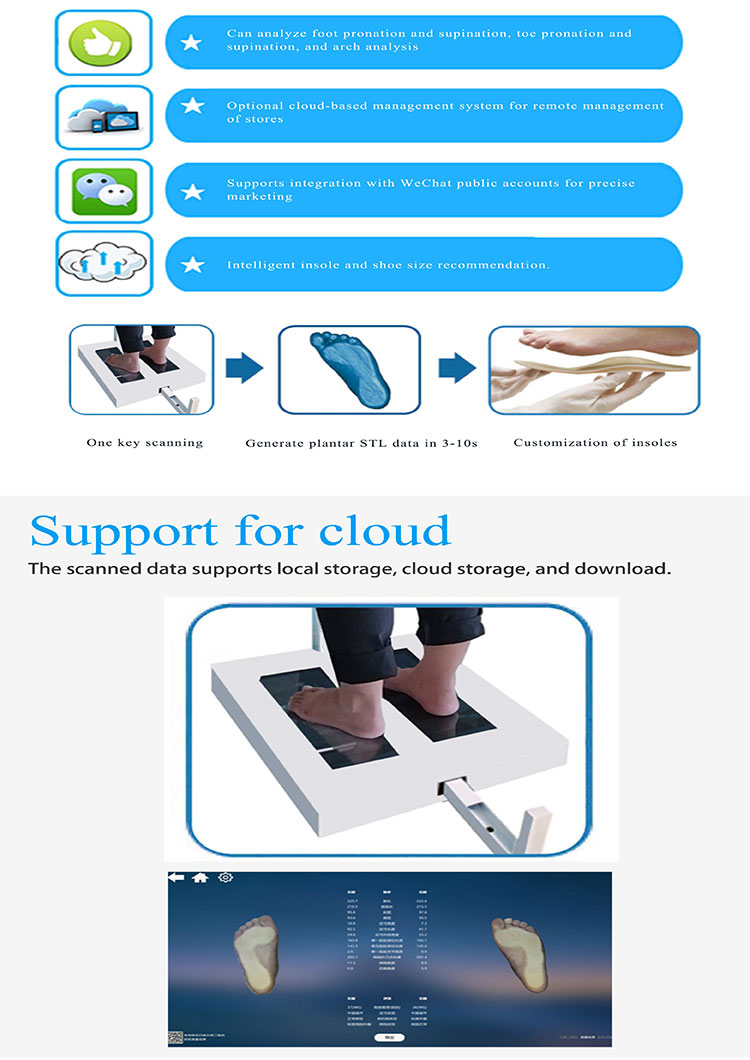
Simply speaking, the production process of corrective insoles mainly includes the following steps:
Obtain plantar 3D data through a plantar 3D scanner.
Obtain plantar pressure distribution and other data through a plantar pressure gait analysis system. This step is optional. For example, mild flatfoot can skip this step, or if there is no foot health problem and the user only wants customized insoles for comfort, this step can also be ignored. Only functional insoles require plantar pressure distribution data.
Import the measured 3D data and plantar pressure data into professional insole design software, where rehabilitation specialists and designers carry out corresponding design, so that the designed insoles truly have corrective effects.
After the designer completes the insole design, the data needs to be imported into relevant software for slicing processing and converted into data that can be directly used by a 3D printer.
Import the sliced data into the 3D printer via a USB drive or other methods for manufacturing. Generally, it takes about half an hour to produce a pair of adult insoles.
Polish and laminate the finished insoles.
Deliver the finished insoles to the customer via express delivery or other methods.
 Back to list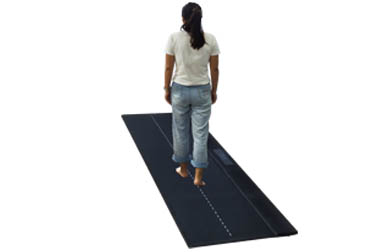


 +86-0755-86131192