
 +86-0755-86131192
 2026-08-21
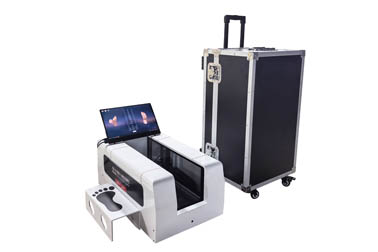
A 3D laser foot scanner adopts optical principles such as laser to collect data of human feet. It obtains three-dimensional foot data and generates visual measurement reports at teh same time.
The 3D laser foot scanner is widely used in custom-made footwear, orthotic insole production, last design, foot condition assessment, footwear research and development, sports biomechanics, rehabilitation and other fields.
Compared with traditional manual measurement, the 3D foot scanner can collect more comprehensive data and capture more complete geometric information of feet. It can generate authentic 3D digital models and support multiple data formats for broader application scenarios.
1. Working Principle of the 3D Laser Foot Scanner
Laser lines perform rapid scanning on the foot surface. During scanning, sensors capture a large number of spatial coordinate points to form foot point-cloud data. After data analysis and processing by computer software, a complete and visual 3D foot model is produced.
Data measurable by the 3D laser foot scanner includes foot length, foot width, forefoot width, heel width, arch height, instep height, toe height, toe morphology, foot contour, left-right foot difference, foot volume, key cross-section dimensions of feet and so on.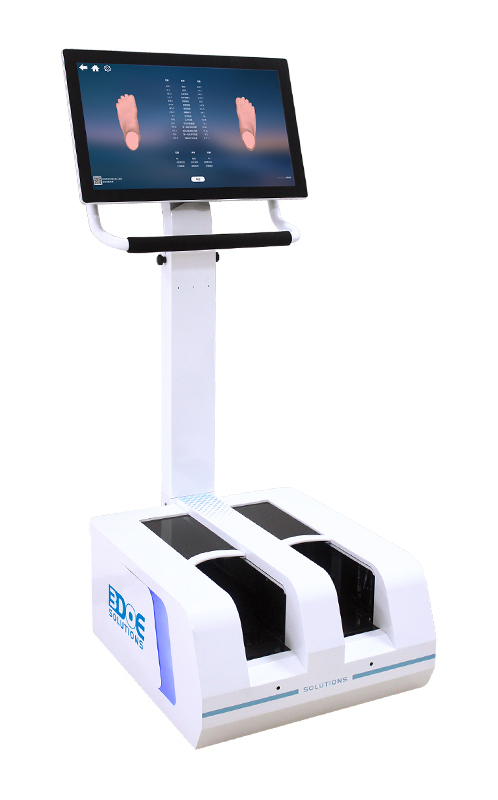
2. Scanning Procedure of the 3D Laser Foot Scanner
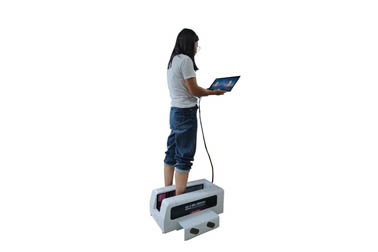
(1)The subject stands barefoot on the designated scanning area of the device as required. Keep a natural posture, make sure feet stay within the scanning zone and avoid body swaying, and look straight ahead. The whole scanning process takes 10-20 seconds.
(2)The foot scanner carries out multi-dimensional data acquisition for feet, including capturing massive spatial coordinates.
(3)The software installed on the computer connected to the scanner analyzes and processes the collected data and spatial coordinates. It generates foot point clouds, then conducts point-cloud stitching, denoising and model reconstruction, and finally outputs a complete 3D foot model.
(4)The acquired data is further analyzed, and corresponding measurement reports are generated based on preset templates. Users can get a full understanding of their foot conditions from the reports, including problems such as flat feet, high arches, heel varus and heel valgus. More than 60 key foot parameters are provided, covering toe classification, shoe size suggestion and insole recommendation.
3.Differences Between 3D Laser Foot Scanner and Plantar Pressure Distribution System
These two devices are often mixed up, yet they have substantial distinctions.
The 3D laser foot scanner mainly measures foot “shape”, which belongs to morphological measurement.
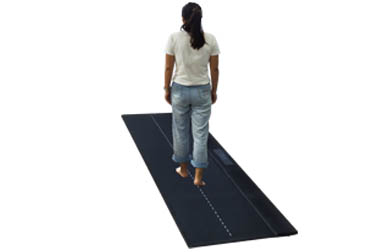
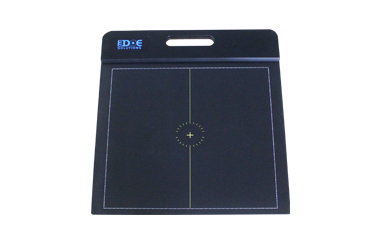
By contrast, the plantar pressure distribution system focuses on measuring plantar pressure distribution.
The 3D foot scanner only supports static measurement.
The plantar pressure distribution system comes with multiple measurement modes, including static measurement, dynamic measurement and balance measurement.
In many practical scenarios, joint measurement of both devices is required.
 Back to list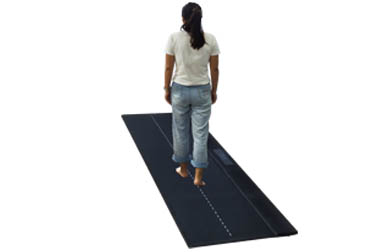


 +86-0755-86131192