
 +86-0755-86131192
 2026-09-08
Traditional shoemaking often relies on standardized shoe sizes, manual foot measurement, and plaster casting, but these methods can only achieve mass standardized production, making it difficult to address differences such as asymmetrical feet, flat feet, high arches, hallux valgus, and other individualized foot shapes, making it difficult to achieve ideal personalized custom production, and even when customization is carried out, the efficiency is very low and the time cost is high.
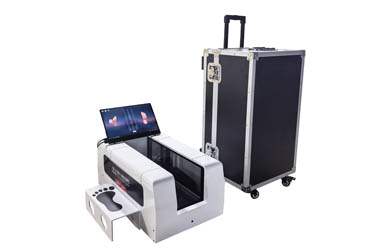
The foot 3D scanning system is based on optical 3D measurement, transforming the physical foot into a digital 3D model, connecting the entire chain of data collection-data analysis-last / shoe design-manufacturing, and enabling footwear to move from “size fitting” to “customization based on the original human foot shape.”
The main technical principle: infrared speckle / structured light projection + synchronized multi-camera acquisition → 3D reconstruction algorithm → foot point cloud → triangular mesh model (STL/OBJ), outputting dozens of parameters such as foot length, foot width, arch height, metatarsal girth, hallux valgus angle, and left-right foot differences.
The main measurement steps: You only need to take off your shoes and socks, roll up your trousers to above the ankles, and then stand in the scanning test area of the device. During the measurement process, intelligent voice prompts will be provided, and you only need to follow the prompts step by step. The entire measurement process takes about 20 seconds, making the operation simple and the measurement time short.
The main purpose of the data is analysis and evaluation: identifying basic dimensions, left-right foot differences, and foot shape classifications (flat feet / high arches / pronation and supination / hallux valgus); used for intelligent shoe selection or generating a customized parameter set.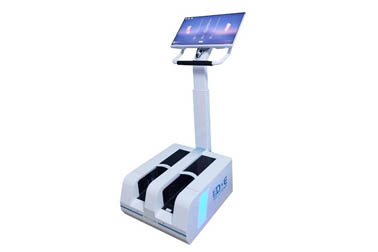
For custom shoes, the core is last reconstruction, and the process is: importing foot data into shoemaking CAD/CAM, applying process compensation according to the product category, and generating a personalized digital last to replace the handmade last and plaster mold.
The digital design of insoles and custom shoes: custom insoles (arch / plantar pressure adjustment and support surfaces), full-shoe customization (automatic unfolding of upper patterns), and AI combined with a foot shape database to optimize the shoe cavity.
There are two types of manufacturing output, one is to use CNC machines to carve physical lasts / insoles, and the other is to use 3D printers to print lasts / insoles / complete shoes.
After the product is completed, it is recommended to further include the following process: finished product fitting feedback → data feedback → model fine-tuning → secondary processing, forming a closed loop.
The foot 3D scanning system is mainly used in the following application scenarios:
Footwear new retail stores (3D foot scanning + AI recommendation).
Shoemaking enterprise R&D (building foot shape databases to optimize lasts).
Medical rehabilitation and orthotics (orthopedic shoes / insoles).
Customized solutions for sports and athletics.
Special populations (asymmetrical feet, deformed feet) — one person, one pair of shoes.
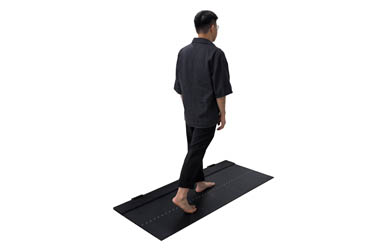
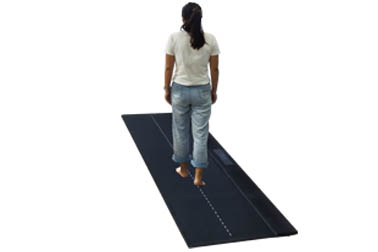
Of course, if you want to make corrective insoles or orthopedic shoes, it is best to combine the system with a plantar pressure distribution system to test plantar pressure and gait data, and then carry out targeted corrective design. In this way, the finished products can better meet corrective needs and achieve relatively ideal corrective results.
If the budget is limited, only a foot 3D scanning device and a carving machine / 3D printer are needed. This can also fully meet personalized requirements and achieve insoles and shoes that completely match the shape of the feet.
 Back to list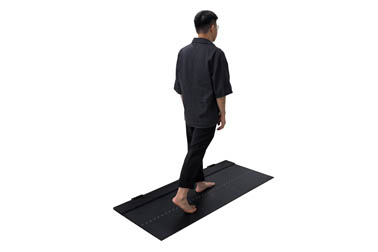


 +86-0755-86131192