
 +86-0755-86131192
 2026-09-03
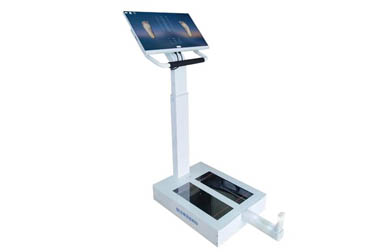
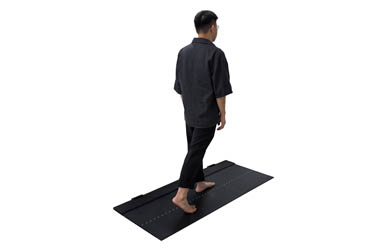
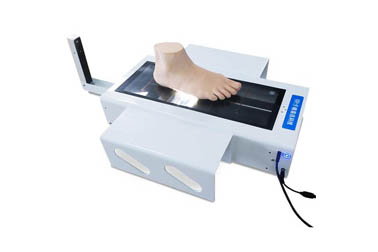
The plantar pressure detection system is a device that uses high-sensitivity pressure sensors to collect data such as the plantar pressure distribution of various foot parts during human static standing and walking movements.
The plantar pressure detection system has three measurement modes, namely static measurement, dynamic measurement and balance measurement.
So what data does balance measurement collect? What are the functions of collecting these data?
The plantar pressure balance measurement mainly collects the sway trajectory, offset amplitude and swing speed of the center of pressure (COP), as well as the weight-bearing ratio of both feet, so as to quantify the human body's stable control ability of the center of gravity during standing.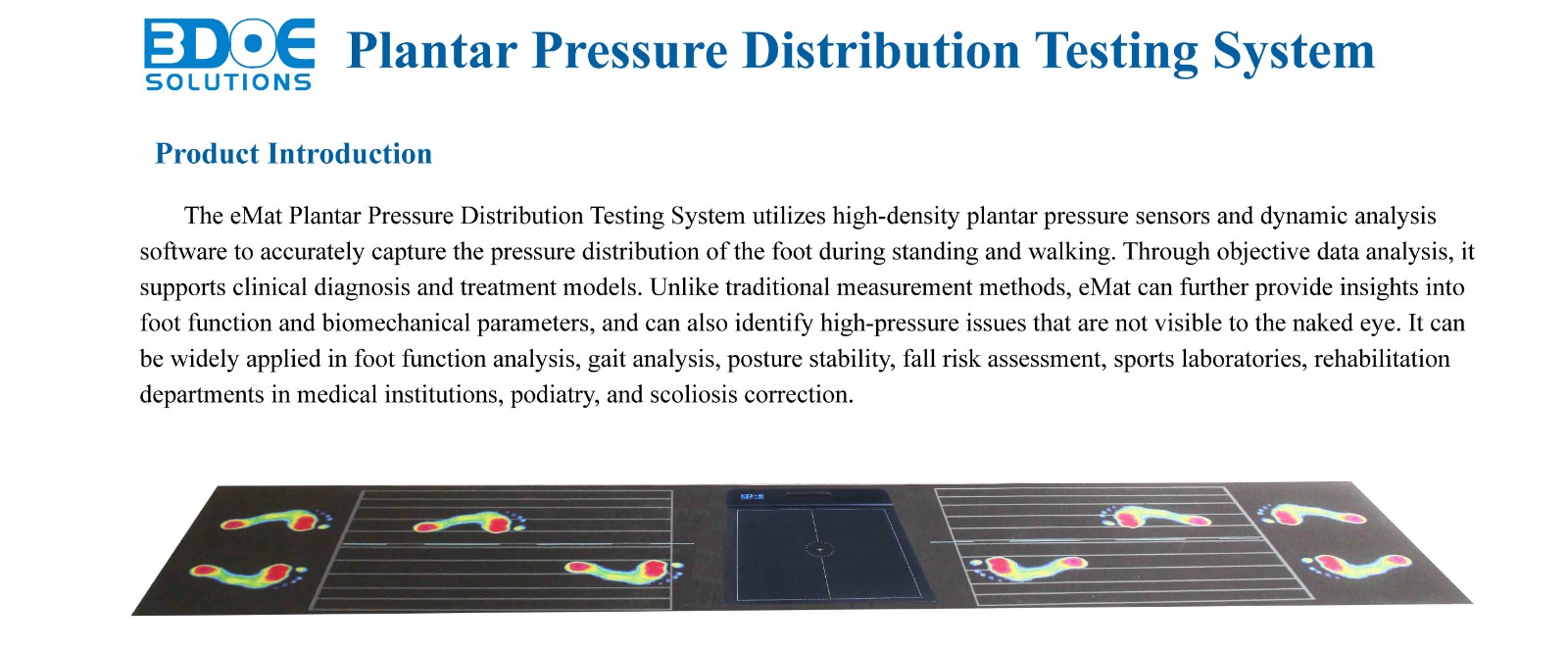
1. Center of gravity trajectory length (cm).
The center of gravity trajectory length refers to the total moving distance of the human body's center of gravity moving back and forth; a larger value means more body sway and more muscle compensation is required to maintain balance; it is used to compare changes before and after rehabilitation.
2. 95% confidence area (cm²).
It is the elliptical area of the 95% distribution of center of gravity points, representing the total sway range of the body.
3. Maximum anteroposterior distance of center of gravity (cm).
This value represents the forward and backward sway amplitude of the human body.
4. Maximum left-right distance of center of gravity (cm).
This value represents the left-right sway amplitude of the human body.
5. Average anteroposterior speed (cm/s).
This value represents the moving speed of the center of gravity in the forward and backward directions.
6. Average left-right speed (cm/s).
This value represents the average swing speed of the center of gravity in the left and right directions.
A higher speed indicates that the human body needs frequent and rapid small adjustments to maintain standing, and the ankle and hip muscles are continuously fine-tuning.
These data can identify the weak direction of human balance, and rehabilitation therapists can formulate targeted lateral balance training based on these data instead of general balance training.
It can also be used to detect the causes of physical symptoms. For example, when the body has symptoms such as leg soreness after long-time standing, unstable ankles, easy left-right swaying while walking and lumbago, the balance measurement data can support targeted analysis.
It can also be applied to fall risk screening. Balance data can be used to evaluate problems such as degraded balance function in advance, and targeted rehabilitation training can be carried out to reduce and avoid fall risks.
Balance measurement generally includes two modes, namely static standing measurement with eyes open and static standing measurement with eyes closed.
The specific measurement mode is selected according to specific application scenario requirements.
It is worth noting that the measured data only serves as a biomechanical screening tool and cannot be used alone for disease diagnosis. Disease diagnosis requires doctors’ comprehensive professional detection and professional judgment combined with other examination results.
 Back to list


 +86-0755-86131192