
 +86-0755-86131192
 2026-03-31
Both high arches and low arches are considered foot deformities and are not normal, healthy conditions of the foot.
Traditional assessment methods include empirical judgment, the footprint method, simple measurement methods, and others.
However, none of these assessment methods are supported by comprehensive data, which can easily lead to misdiagnosis or large assessment errors, nor can they be convincingly accepted by the general public.
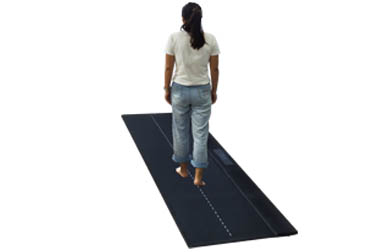
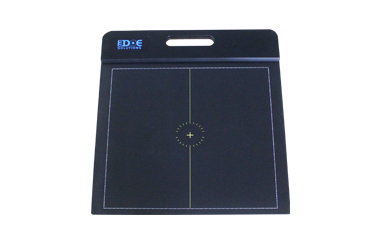
But with the introduction of plantar laser 3D scanners, assessing high arches and low arches has become a very easy task.
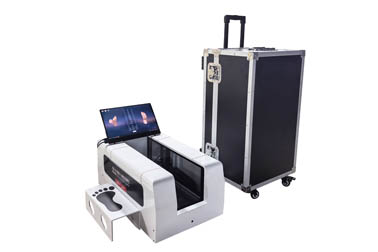
For example, the 3DOE plantar 3D laser scanner: when a person stands on the device, it generally takes only about 20 seconds to obtain more than 20 key sets of data of the plantar surface, including hallux analysis, arch analysis, heel varus, heel valgus, foot length, arch length, sole length, first metatarsal length, fifth metatarsal length, center of gravity length, heel margin length, total heel width, lateral arch width, foot width, arch height, first metatarsophalangeal joint height, footprint index, foot width index, and others.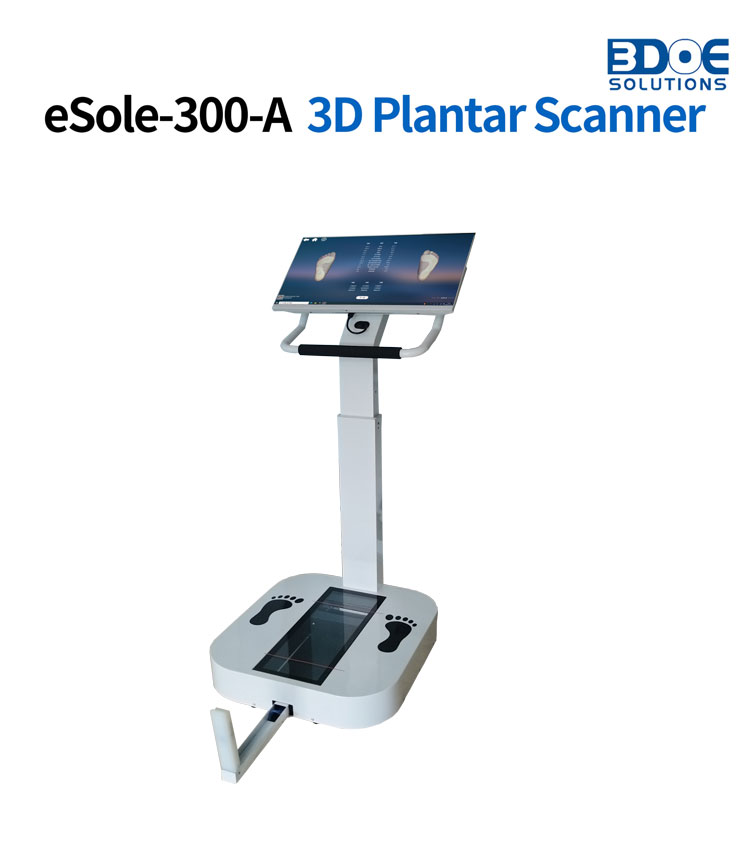
In addition, it can directly generate 3D data such as STL files, as well as PDF or Word measurement reports, with an accuracy of 0.5 mm.
The assessment of high arches and low arches is mainly based on the arch index.
Arch Index, namely AI.
AI = midfoot area / total plantar area (excluding toes).
When AI < 0.21, it indicates a high arch.
When AI is between 0.21 and 0.26, it indicates a normal arch range, i.e., a normal foot.
When AI > 0.26, it indicates a low arch, namely flatfoot.
In cases of flatfoot or high arch, certain intervention and correction are recommended. For instance, mild flatfoot and high arch can be gradually corrected through orthotic insoles. For more severe cases, in addition to auxiliary orthotic insoles, corresponding training or even surgery may be required to achieve correction.
In fact, for adolescents and children, as the foot is still in the stage of growth and development, if foot problems occur, correction using orthotic insoles is relatively appropriate and carries little risk.
However, for adults, the foot bones have already been fully formed. Methods such as orthotic insoles often only provide an improvement effect, and it is difficult to achieve a complete cure. If the condition is not severe, orthotic insoles can still be used to achieve an improvement effect.
 Back to list


 +86-0755-86131192