
 +86-0755-86131192
 2026-01-19
Application Value of Plantar Pressure Plates in the Diagnosis of Lower Limb Alignment Abnormalities
1. Diagnosis of Mild Alignment Abnormalities
Suspected pes varus/valgus, mild genu varum/valgum, population with gait deviation, initial diagnosis and assessment system.
Main Purposes: Pressure analysis of mild alignment deviation, pressure distribution monitoring of abnormal gait, alignment assessment associated with foot shape. Screening and diagnosis of initial alignment abnormalities, daily gait pressure data collection, quantitative analysis of mild deviation, combined diagnosis of ankle-foot alignment, data support for initial intervention.
2. Diagnosis of Moderate Alignment Abnormalities
Structural pes varus/valgus, knee-ankle alignment imbalance, chronic lower limb discomfort, advanced diagnosis and assessment system.
Main Purposes: Pressure mapping of moderate alignment imbalance, diagnosis of knee-ankle linkage abnormalities, retrospective analysis of chronic discomfort. Quantification of structural alignment abnormalities, assessment of pressure transmission in lower limb joints, data support for advanced diagnosis, tracking of alignment abnormality progression, basis for formulating intervention programs.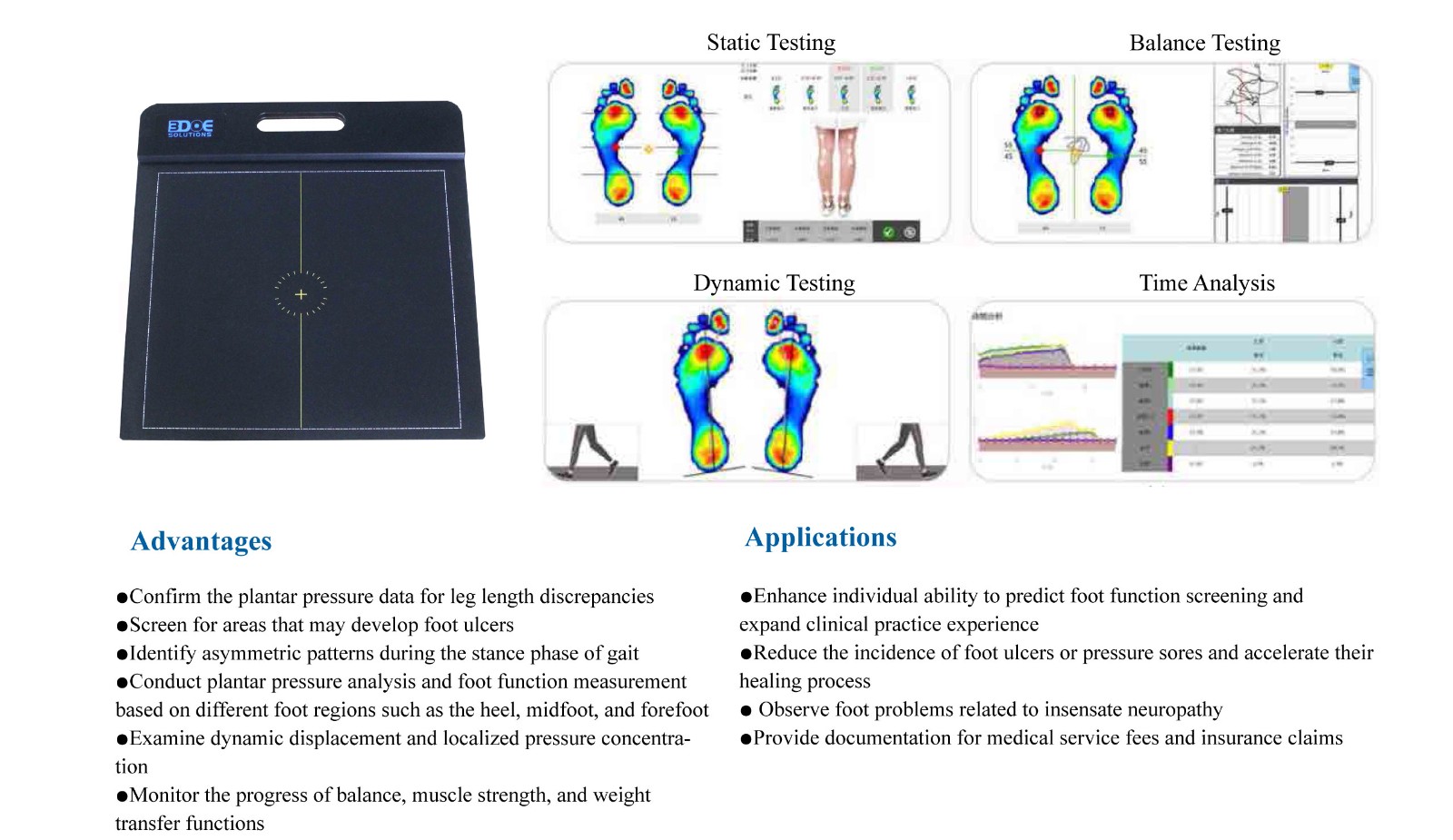 3. Diagnosis of Severe Alignment Abnormalities
Severe foot deformity, lower limb joint degeneration, postoperative alignment correction, comprehensive diagnosis and assessment system.
Main Purposes: Pressure diagnosis of alignment in severe deformity, correlation analysis of joint degeneration, assessment of postoperative alignment recovery.
4. Alignment Monitoring During Rehabilitation Period
Post-alignment correction surgery, rehabilitation training tracking, intervention effect assessment, dynamic monitoring and diagnosis, etc.
Main Purposes: Dynamic pressure monitoring of postoperative alignment, quantification of rehabilitation training effects, optimization and adjustment of intervention programs. Gait pressure analysis during rehabilitation, tracking of alignment recovery trends, data support for rehabilitation effects, diagnostic support for later-stage maintenance.
5. Alignment Diagnosis for Special Populations
Adolescent developmental stage, middle-aged and elderly functional decline, obese population, postoperative alignment deviation diagnosis system.
Main Purposes: Monitoring of alignment development in adolescents, diagnosis of alignment degeneration in middle-aged and elderly people, pressure load analysis of alignment in obese population. Screening of postpartum alignment deviation, extraction of pressure characteristics in special populations, alignment early warning during developmental stage, alignment assessment of functional decline.
6. Clinical Comprehensive Diagnosis System
Orthopedic clinical diagnosis, rehabilitation medicine assessment, sports medicine screening, multi-scenario diagnosis supporting system.
Main Purposes: Accurate diagnosis of orthopedic alignment abnormalities, data support for rehabilitation medicine, alignment retrospective analysis of sports injuries. Optimization of clinical diagnosis procedures, multi-disciplinary linkage data sharing, standardized assessment of alignment abnormalities, precise adaptation of diagnosis and treatment programs, tracking and support for clinical efficacy.
3. Diagnosis of Severe Alignment Abnormalities
Severe foot deformity, lower limb joint degeneration, postoperative alignment correction, comprehensive diagnosis and assessment system.
Main Purposes: Pressure diagnosis of alignment in severe deformity, correlation analysis of joint degeneration, assessment of postoperative alignment recovery.
4. Alignment Monitoring During Rehabilitation Period
Post-alignment correction surgery, rehabilitation training tracking, intervention effect assessment, dynamic monitoring and diagnosis, etc.
Main Purposes: Dynamic pressure monitoring of postoperative alignment, quantification of rehabilitation training effects, optimization and adjustment of intervention programs. Gait pressure analysis during rehabilitation, tracking of alignment recovery trends, data support for rehabilitation effects, diagnostic support for later-stage maintenance.
5. Alignment Diagnosis for Special Populations
Adolescent developmental stage, middle-aged and elderly functional decline, obese population, postoperative alignment deviation diagnosis system.
Main Purposes: Monitoring of alignment development in adolescents, diagnosis of alignment degeneration in middle-aged and elderly people, pressure load analysis of alignment in obese population. Screening of postpartum alignment deviation, extraction of pressure characteristics in special populations, alignment early warning during developmental stage, alignment assessment of functional decline.
6. Clinical Comprehensive Diagnosis System
Orthopedic clinical diagnosis, rehabilitation medicine assessment, sports medicine screening, multi-scenario diagnosis supporting system.
Main Purposes: Accurate diagnosis of orthopedic alignment abnormalities, data support for rehabilitation medicine, alignment retrospective analysis of sports injuries. Optimization of clinical diagnosis procedures, multi-disciplinary linkage data sharing, standardized assessment of alignment abnormalities, precise adaptation of diagnosis and treatment programs, tracking and support for clinical efficacy.
 Back to list


 +86-0755-86131192