
 +86-0755-86131192
 2026-09-07
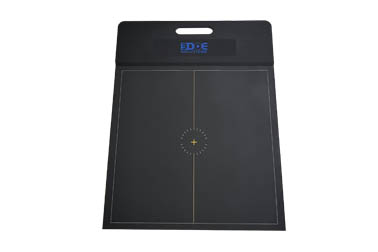
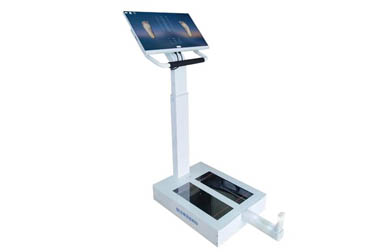
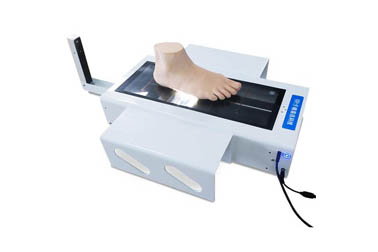
A plantar pressure tester (plantar pressure analysis system) is a professional device that relies on a high-density sensor matrix to collect biomechanical data such as plantar pressure, pressure distribution, contact area, center-of-gravity trajectory, and other data between the sole of the foot and the contact surface when a person is standing, walking, or running, and converts the invisible plantar loading into visual pressure maps, curves, and quantitative reports.
The core principle of plantar pressure testing can be simply understood as: the human body applies pressure → the pressure sensors detect it → electrical signals are collected → the software performs calculations → pressure data and images are generated.
When a person's foot steps onto the sensing area of the plantar pressure tester, the sensors detect the pressure conditions of different areas of the sole in real time and generate corresponding electrical signals.
The higher the density of the sensors, the more detailed the collected plantar pressure distribution data will be.
The plantar pressure information collected by the sensors is read through the data acquisition module and transmitted to terminals such as computers/tablets, and is presented in the software in the form of visualizations and charts.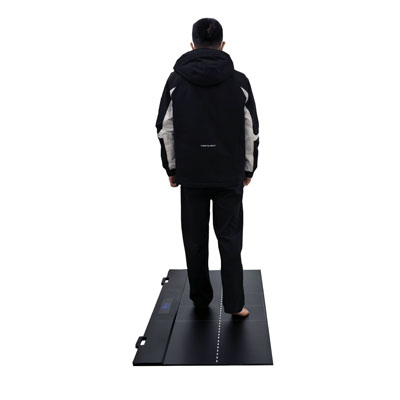
The most common application fields of plantar pressure testers are as follows:
Conduct foot health assessments.
Through the measured pressure data and gait data, we can assess whether the plantar loading is balanced, whether there are significant differences between the left and right feet, whether different areas of the foot are subjected to excessive pressure, how the center of pressure changes during walking, and so on.
Conduct gait analysis.
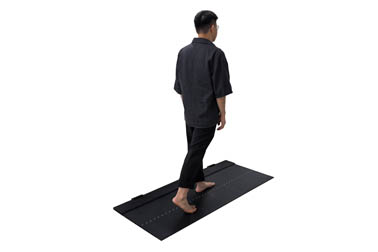
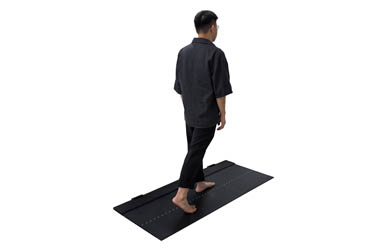
Through a plantar pressure analysis system, we can collect changes in pressure during walking.
For example, detecting the pressure changes throughout the process of foot landing → plantar loading → center-of-gravity transfer → forefoot loading → push-off and toe-off.
These data can be applied to gait research, rehabilitation assessment, and sports performance analysis.
Conduct footwear development.
By testing and comparing the effects of different outsole, insole, and last designs on pressure, we can further optimize the cushioning performance, support performance, plantar comfort, insole design, and outsole structure of shoes.
Apply it in sports science.
Plantar pressure testing can help coaches and sports researchers analyze: running landing patterns, pressure changes between the forefoot and rearfoot, loading differences between the left and right feet, peak pressure values under different movements, and the effects of sports equipment on plantar pressure.
These data can better optimize sports performance and prevent sports injuries.
Apply it in rehabilitation training.
For example, testing can be conducted at different stages of rehabilitation: initial testing → rehabilitation training → stage testing → final assessment.
By comparing changes in plantar pressure testing data at different stages, we can determine the effectiveness of the training and optimize the corresponding training plan.
When purchasing a plantar pressure tester, it is recommended to select one based on the following aspects.
First is the number and resolution of the sensors.
Because the higher the density of the sensors, the more precise the measured pressure data will be.
Of course, it is not necessarily better to have more sensors, but rather to consider our application scenario, for example, if the testing space is very small, a pressure plate with a large size and too many sensors may not be suitable.
In addition to paying attention to the number and resolution of the sensors, it is also necessary to pay attention to the testing frequency of the pressure plate.
If dynamic measurement is required, the sampling frequency is relatively important.
Especially when performing fast movements such as running and jumping, the plantar pressure analysis testing equipment needs to have a relatively high sampling capability.
If only static measurement is performed, there is no need for excessively high requirements.
 Back to list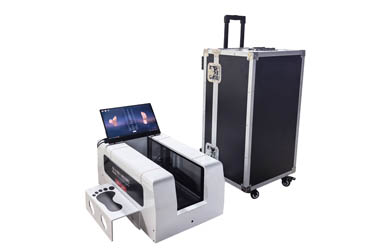


 +86-0755-86131192