
 +86-0755-86131192
 2026-04-02
Orthotic insoles are mainly used to correct certain deformities of the foot, such as flatfoot correction, high‑arched foot correction, foot varus correction, foot valgus correction, and so on.
In the past, measuring foot dimensions when making orthotic insoles was a very complicated step, because sufficient data had to be collected to create a proper model. Moreover, manual measurement was prone to relatively large errors, and the data could not be sufficiently comprehensive. For example, certain curves were difficult to measure by hand.
Now, however, with the availability of 3D foot scanners, the measurement process has become extremely simple.
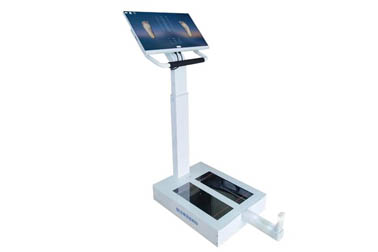
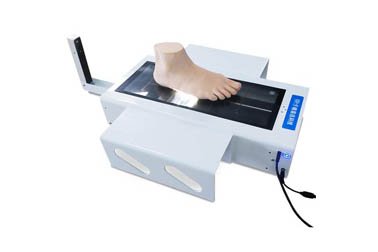
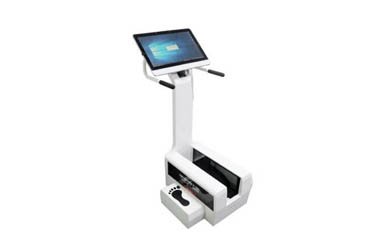
For instance, with the 3DOE 3D laser foot scanner, a customer can complete foot data collection in approximately 20 seconds. The scanner can collect more than 20 sets of data and generate 3D data in formats such as STL and OBJ.
In addition, to achieve satisfactory results with orthotic insoles, abundant plantar pressure distribution data is also required. This allows for more precise arrangement of support strength at various parts of the foot, making the support for each area more scientific and reasonable, and enabling targeted correction at precise affected areas.
The 3DOE plantar pressure and gait analyzer can quickly measure a user’s plantar pressure distribution, gait data, and other information. The measurement time is very short, usually completed in just tens of seconds.
Both the 3D data from the 3D foot scanner and the data from the plantar pressure system can be imported into professional insole design software for corresponding design.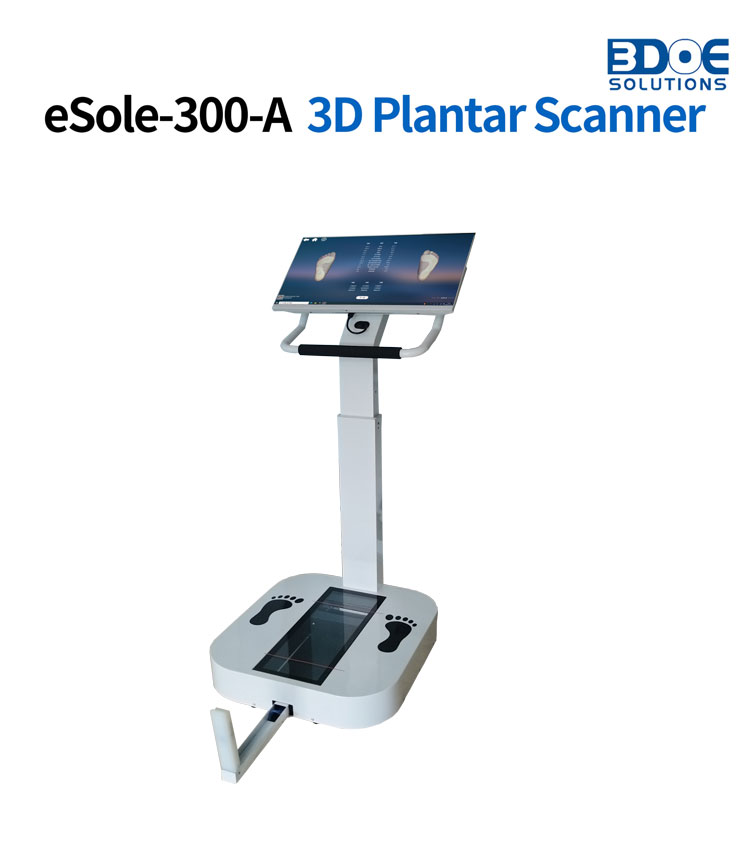
Simply put, the production process of orthotic insoles mainly includes the following steps:
1. Obtain 3D foot data using a 3D foot scanner.
2. Obtain plantar pressure distribution and other data using a plantar pressure and gait analyzer. This step is optional. For example, it can be skipped for mild flatfoot, or for users who only want custom insoles for greater comfort without any foot health problems. Plantar pressure distribution data is only used for making functional insoles.
3. Import the measured 3D data and plantar pressure data into professional insole design software, where rehabilitation specialists and designers carry out corresponding design to ensure the finished insoles truly provide corrective effects.
4. After the designer finalizes the insole design, the data must be imported into relevant software for slicing processing and converted into data directly usable by 3D printers.
5. Transfer the sliced data to a 3D printer via a USB flash drive or other means for production. It generally takes about half an hour to produce one pair of adult insoles.
6. Polish and apply a surface covering to the finished insoles.
7. Deliver the completed insoles to the customer via express delivery or other methods.
 Back to list


 +86-0755-86131192