
 +86-0755-86131192
 2025-12-23
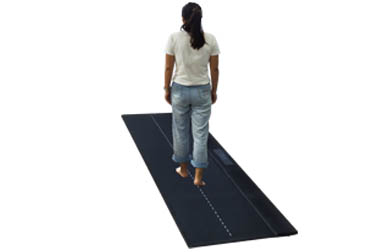
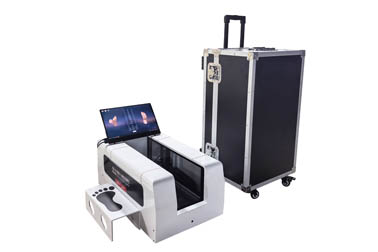
The plantar pressure system uses the principle of pressure sensing and is applied to fall risk assessment and the formulation of fall-prevention training programs for elderly people. It usually has the following functions:
1. High assessment accuracy, more accurate fall risk judgment.
Based on the principle of pressure sensing, pressure-sensing chips are used to obtain pressure distribution data from different regions of the plantar surface of the elderly. The evaluation results are detailed and have small errors.
The measured plantar pressure distribution data can be used for accurate assessment of fall-related risks such as gait abnormalities, uneven plantar load distribution, and decreased balance ability.
2. High assessment efficiency, more convenient formulation of training programs.
Generally, plantar pressure system measurement only takes 6–25 seconds to complete the test and can obtain complete assessment data related to fall risk.
In contrast, traditional assessment methods not only have larger data errors but also require a longer time, usually five to six minutes or even longer.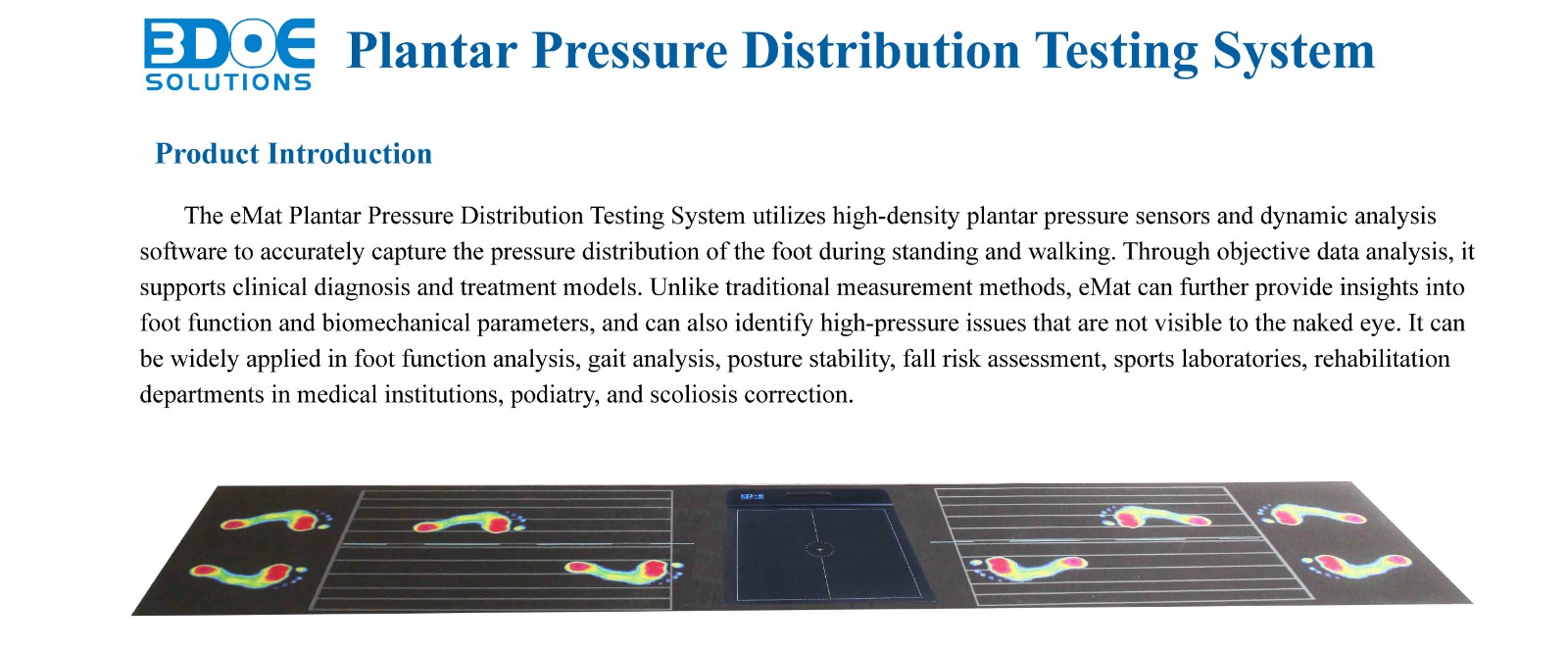
3. Non-invasive detection, suitable for the elderly population.
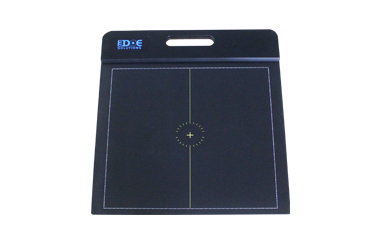
The plantar pressure system detects pressure signals generated by contact between the pressure-sensing mat and the plantar surface of the elderly. It does not require invasive operations and belongs to non-invasive detection.
This detection method avoids discomfort caused by invasive procedures during testing and also avoids the risk of skin injury or infection resulting from invasive detection.
It is especially suitable for elderly people with weaker physical conditions, sensitive skin, or those who are resistant to invasive examinations.
4. Ability to obtain dynamic gait change data.
Through pressure sensing detection, subtle fluctuations in plantar pressure during gait changes of the elderly can be captured, making the assessed fall risk data more complete and accurate.
It is particularly suitable for institutions and application scenarios with high requirements for fall risk assessment accuracy, such as community health service centers and geriatric rehabilitation hospitals.
5. High safety, no adverse stimulation, suitable for long-term risk monitoring.
The device adopts flexible pressure-sensing technology and has no adverse stimulation such as electromagnetic radiation. It is harmless to the human body and can meet the needs of long-term and repeated fall risk monitoring and training effect tracking for elderly people.
 Back to list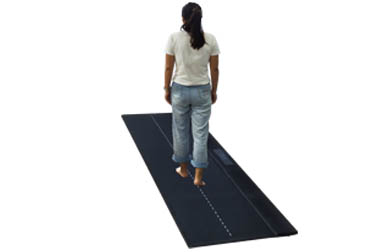


 +86-0755-86131192