
 +86-0755-86131192
 2025-07-02
In the traditional impression, walking seems to have little to do with "medical equipment". However, with the development of rehabilitation medicine and intelligent detection, a "gait analysis technology" originally hidden in sports science is being widely adopted by more and more hospitals, rehabilitation institutions, and clinical departments.
And the key tool behind this is the gait analyzer.
So, which medical departments are gait analyzers suitable for? What role can it play in different departments? Today, we will reveal the answers one by one.
1. What is a gait analyzer?
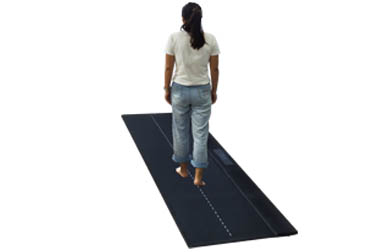
Simply put, a gait analyzer is an intelligent device that collects parameters such as stride, speed, support time, swing mode, left-right symmetry, etc. during human walking and performs data analysis.
It can not only "see" your walking posture, but also quantify the differences and abnormalities between each step, providing doctors with objective reference basis.
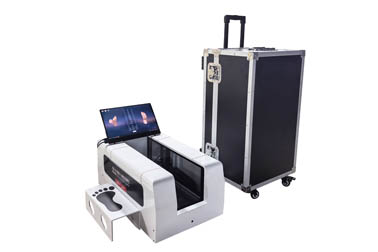
Modern gait analysis systems usually include:
High-precision infrared or laser ranging sensors
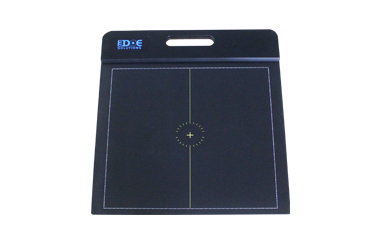
Foot data acquisition board or dynamic camera system
Visual analysis software platform
Case archiving and comparison system
Its core value lies in: turning abnormal gaits that cannot be detected by the naked eye into traceable and quantifiable data reports.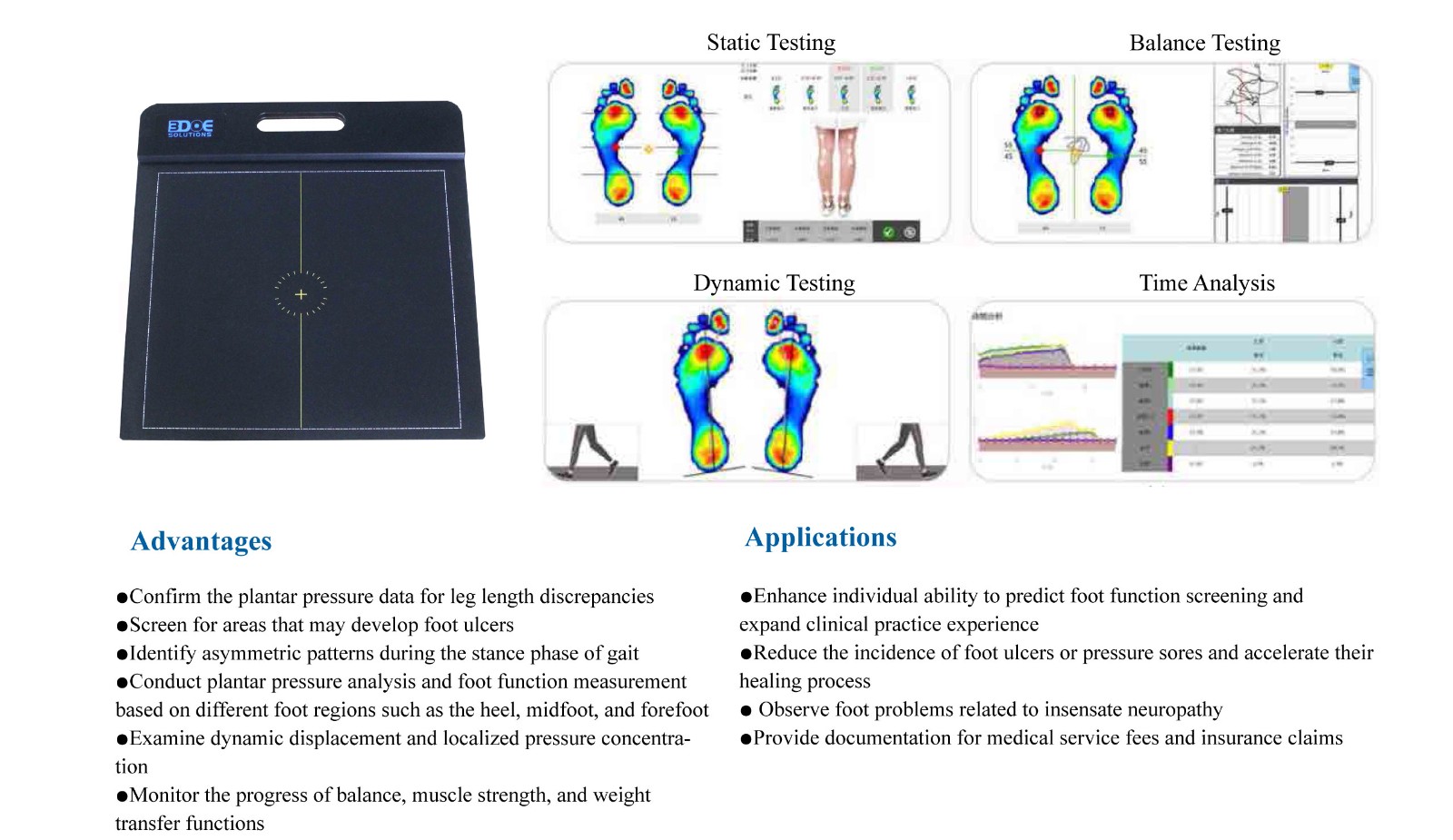
2. The use scenarios of gait analyzers are far beyond your imagination
1. Rehabilitation medicine: gait assessment is a basic diagnosis and treatment link
Rehabilitation is one of the most core use scenarios of gait analyzers. For many patients with stroke, hemiplegia, paraplegia, cerebral palsy or lower limb postoperative rehabilitation, gait recovery is a key goal.
Gait analysis can help doctors:
Clarify whether the hemiplegic side participates in support
Determine whether the gait frequency is symmetrical
Set staged training goals
Track rehabilitation progress and adjust strategies
In a word, it is a "digital stethoscope" for rehabilitation doctors and a "microscope" that can see the details of the patient's walking.
2. Orthopedics: Preoperative evaluation and postoperative follow-up
Many orthopedic diseases, such as knee arthritis, hip replacement, ankle sprain, lower limb deformity correction, etc., directly affect the patient's walking style.
Gait analysis can assist doctors:
Evaluate the degree of gait abnormality of patients before surgery
Verify whether the surgical effect is up to standard after surgery
Guide the customization of personalized braces or insoles
Monitor changes in joint function and warn of complications in advance
Especially in geriatric orthopedics and trauma orthopedics, gait data can be used as an important basis for judging the quality of recovery.
3. Neurology and neurosurgery: Capture subtle nerve damage signals
Many neurological diseases (such as Parkinson's disease, cerebellar ataxia, sequelae of brain trauma) will manifest as asymmetric gait or coordination disorders.
Gait analyzers can detect early:
Narrowing of stride, dragging, freezing
Abnormal support phase of both lower limbs
Slow start, unstable posture control and other problems
Through quantitative data, neurologists can further determine the location and degree of nerve damage and assist clinical decision-making.
4. Pediatrics or child development and behavior department: Early detection of developmental problems
Abnormal gait in children is often related to developmental delay, cerebral palsy, hereditary muscle diseases, etc. Young children find it difficult to accurately express discomfort, and gait analysis has become an important handle for non-verbal clues.
For example:
Determine whether the child has inward-toed, outward-toed, dragging feet, and weak walking
Assist doctors to evaluate muscle tension or lower limb length differences
Compare with children's growth trajectory data to predict potential risks
Early detection and early intervention are the core principles of pediatric medicine, and gait data is an important tool for "early detection".
5. TCM Rehabilitation Department and Pain Clinic: Identify Constitution and Adjust Gait
In the TCM rehabilitation system, "movement generates yang, and stillness generates yin", and gait can reflect the function of internal organs, the flow of qi and blood, and the state of meridian dredging.
Modern TCM Rehabilitation Department can combine gait data to:
Assist in judging the manifestations of lower limb weakness, hemiplegia, qi deficiency constitution, etc.
Guide the landing point and direction of moxibustion, acupuncture, and massage
Objectively reflect the "physique improvement" before and after conditioning
In chronic pain management, doctors can also judge the pain persistence area or compensation mode by observing gait changes.
3. Gait is a medical language
Many diseases cannot speak, but they can "walk".
Gait analyzer is not only a digital diagnostic tool, but also another pair of eyes for doctors, seeing signals that patients cannot see or say.
From rehabilitation department to orthopedics, from pediatrics to neurology, and then to pain clinic and TCM treatment, gait analyzer is no longer a niche tool, but an interdisciplinary bridge.
It connects clinical judgment with data support, connects doctors' experience with intelligent insights, and connects patients' step-by-step recovery with an improvement in their quality of life.
 Back to list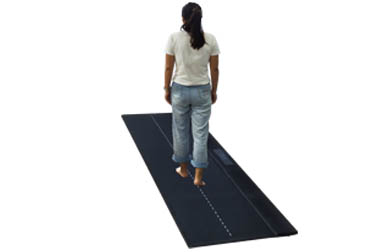


 +86-0755-86131192